


Hidden treasure
When you take a trip to Britain, what do you visit? You probably start in London and then go on a day trip to Oxford or Stratford-upon-Avon. If you’ve got time, you might go up to Scotland, but not many foreign tourists have been to the little village of Portmeirion in north-west Wales.
Portmeirion
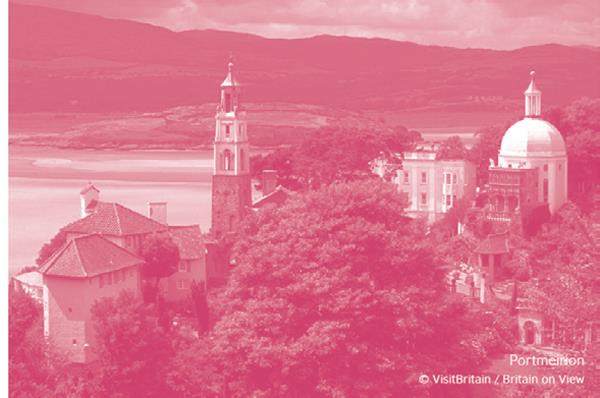
Portmeirion was built in the style of an Italian village by the eccentric architect Clough Williams-Ellis. It has a beautiful position on a hill overlooking the coast. Visitors can stay in one of the apartments in the village or just visit for the day to see the wonderful architecture, have a snack or a meal, visit the shops and walk around the beautiful gardens.
The architect
Clough Williams-Ellis was born in England in 1883. He studied natural sciences at Cambridge University but gave up and went to work for an architect instead. He worked as an architect for most of his life, but he also campaigned hard to protect the environment, particularly in North Wales. He died in April 1978 at the age of 94.
A brief history
Clough bought the site for the village in 1925. It was relatively cheap because the buildings which were there at the time were in ruins. His goal was to show that you could develop a site without losing its natural beauty. Many old statues and buildings were rescued and brought to North Wales, so Clough described Portmeirion as ‘a home for fallen buildings’. He worked on and off on the project until 1975.
The gardens
The village is surrounded by woodlands. Because of its protected position between two rivers, the climate of Portmeirion is very mild and subtropical plants can grow there. As well as the exotic plants, a walk through the gardens takes you past lakes, pagodas, statues and even a dogs’ cemetery.
Famous vi